
Many artists have aimed to capture the essence of the American West over the decades, but few succeeded like Maynard Dixon. Over much of his 71 years, Dixon painted the deserts, canyons and people of the Southwest, revealing the soul of this hypnotic land.
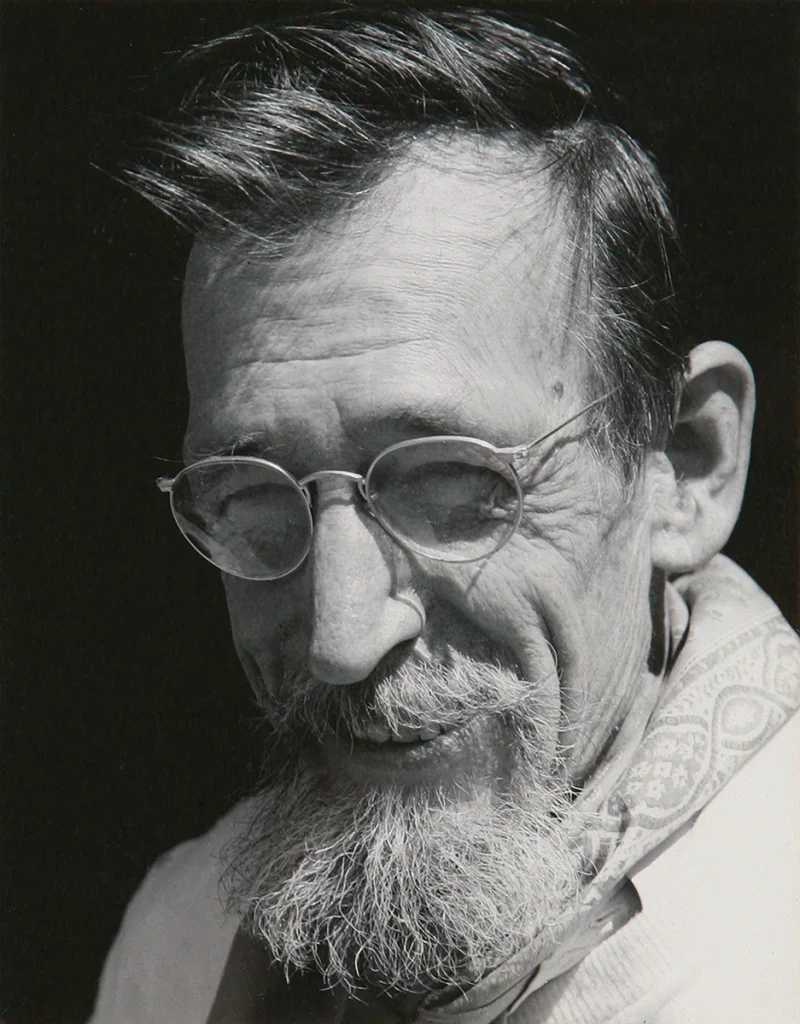
“Dixon lived during an unusual time, spanning the Gilded Age to the Nuclear Age, giving him a unique perspective of the changing American West,” says Mark Sublette, president of the Mark Sublette Medicine Man Gallery in Tucson, Ariz., where a number of Dixon’s works on are displayed. “He interpreted what he saw through the lens of history, of arid lands and Native inhabitants, with an artistic skill set rarely seen during his lifetime.”
Fresno Roots
Maynard Dixon was born in 1875 in Fresno, Calif., on a ranch started by his father, who was a former Confederate soldier. Dixon loved drawing as a child, and as a teenager, sent a portrait he sketched to the well-known artist Frederick Remington, asking his opinion. Remington wrote back with encouragement, stating he was impressed by Dixon’s talent. Two years later, Dixon enrolled in the California School of Design to study art.
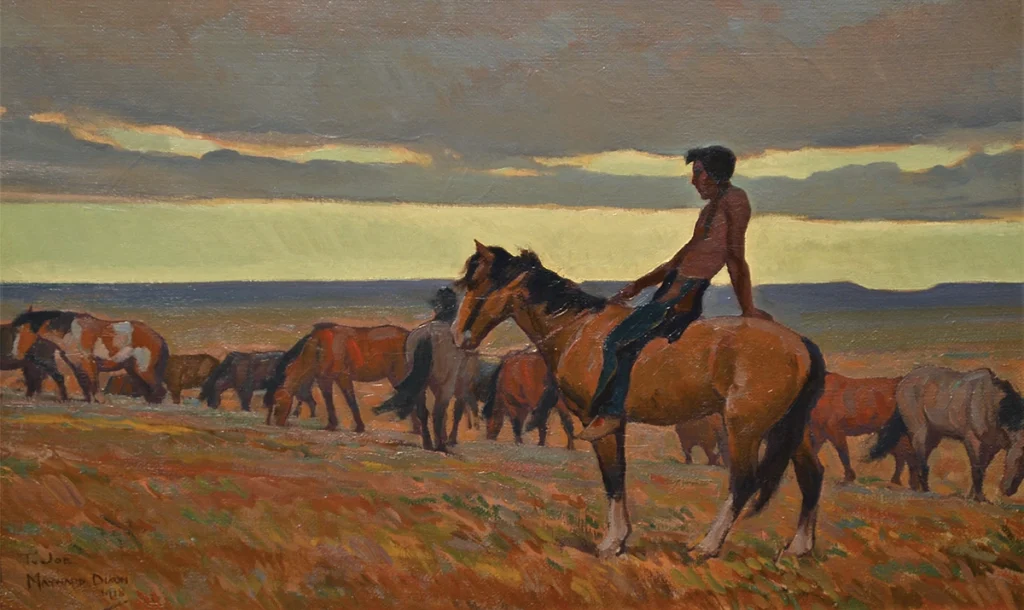
By the age of 18, Dixon was providing illustrations for the Overland Monthly, a literary and cultural magazine published in California. Two years later, he did his first cover for the magazine, and was soon being touted as the new Frederick Remington.
In 1900, Dixon traveled to Mexico and Arizona, and a year later embarked on a 1,000-mile horseback trek through California, Oregon and Idaho with his friend, artist Edward Borein. After this, Dixon’s art would take on its strongest western themes.
“Seeing cowboys breaking horses and ranch life gave Dixon a unique perspective of the Old West,” says Sublette. “He used these small drawings for the rest of his life as references and as memories he cherished.”
Earthquake Aftermath
Dixon was living in San Francisco in 1906 when the devastating San Francisco earthquake shook the city. An ensuing fire destroyed much of the city, including Dixon’s studio. He lost Navajo rugs, his library, and all of his canvases. He later went on to illustrate the cover of a special issue of Sunset magazine, showing San Francisco rising above the ashes of destruction.
With the San Francisco art world severely damaged because of the quake, Dixon began looking for work in other parts of the country. He was hired by the Southern Pacific Railroad to paint four lunette-shaped canvases for a new train depot in Tucson, Ariz. He painted these four classic Southwestern scenes while in San Francisco, titling his paintings the “The Cattleman,” “The Apache,” “The Prospector” and “Irrigation.” He then went to Tucson to help install the murals, three of which are now on permanent display at the Tucson Museum of Art.
In 1908, Dixon and his first wife Lillian moved to New York City so Dixon could find more work. He was given commissions to create magazine and book illustrations, and became well acquainted with Western artist Charlie Russell and the infamous Buffalo Bill Cody.
Back to the West
It wasn’t long before Dixon became homesick for the West, leaving New York for San Francisco in 1912. His first exhibition in the Southwest took place that year at the University of Arizona in Tucson at a show called “Modern Art From The American West.” Four of Dixon’s oils were exhibited.
He later began showing his work at a number of exhibitions in northern California. In 1915, he was awarded the Bronze Medal at the Panama Pacific International Exposition in San Francisco. Dixon’s exhibition at this event exposed him to the European impressionistic style, which he would come to incorporate into his own work.
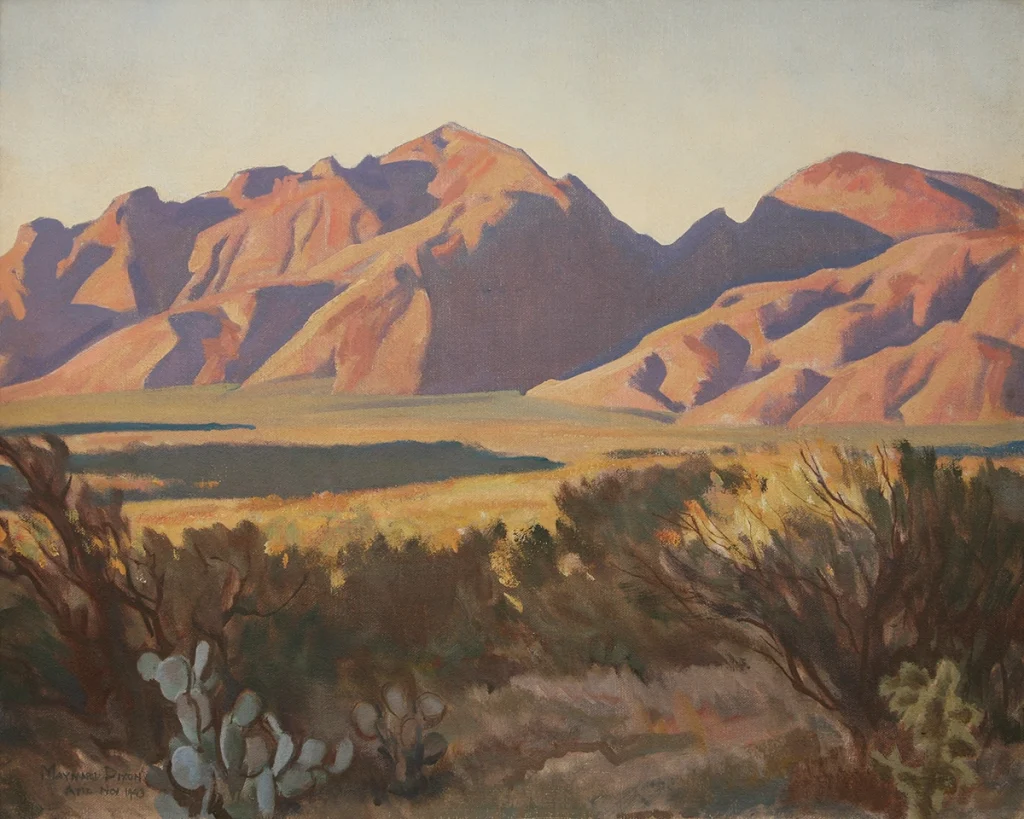
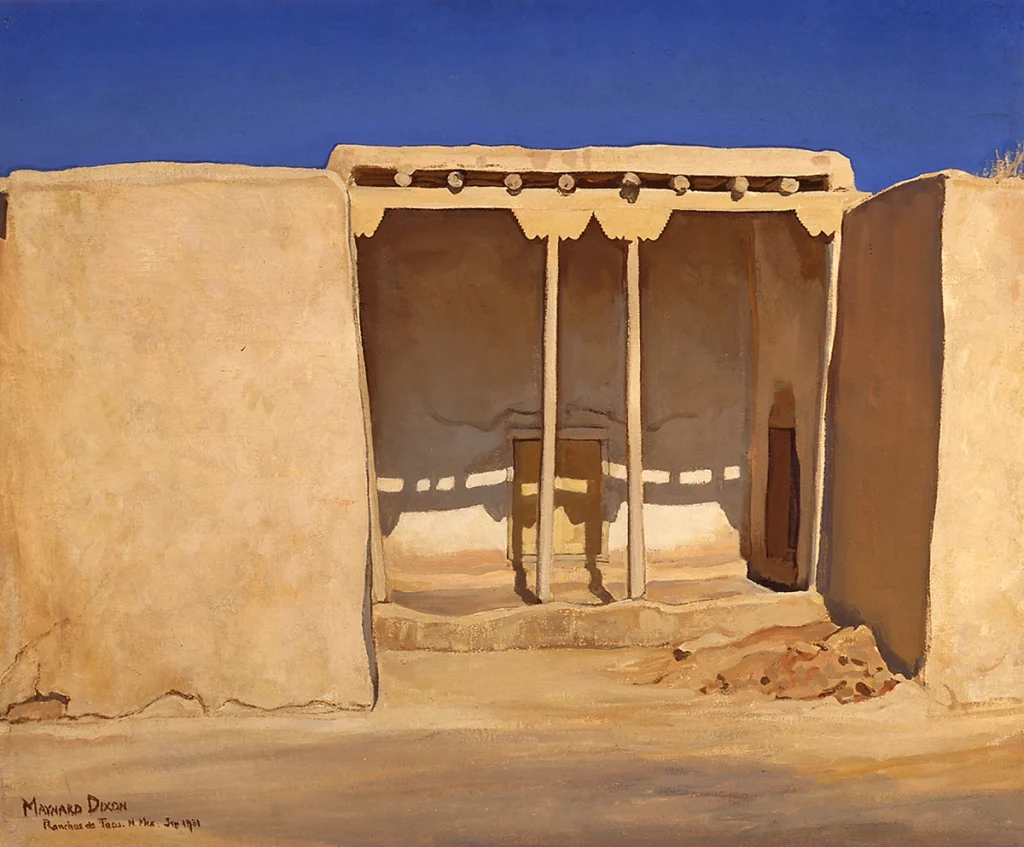
Two years after his marriage with Lillian ended, Dixon married photographer Dorothea Lange, who would later become known for her portraits of migrant farmers during the Depression. The couple moved to Arizona, staying for several months on the Navajo Reservation. Dixon went on to paint scenes inspired by sketches he made of this picturesque landscape, focusing on clouds and sky. A year later, the couple spent time on the Hopi Reservation in Arizona, where Dixon obtained more inspiration for his artwork.
Dixon went on to travel throughout the West over the next several years, visiting Taos, N.M., and Zion National Park, painting his interpretations of the incredible scenes and landscapes he witnessed. When the Depression struck, he took a cue from his wife, who began photographing displaced farmers leaving the Dust Bowl for a new life in the West. Dixon produced several paintings that were uncharacteristic of his usual style, expressing the harsh conditions these migrants were experiencing.
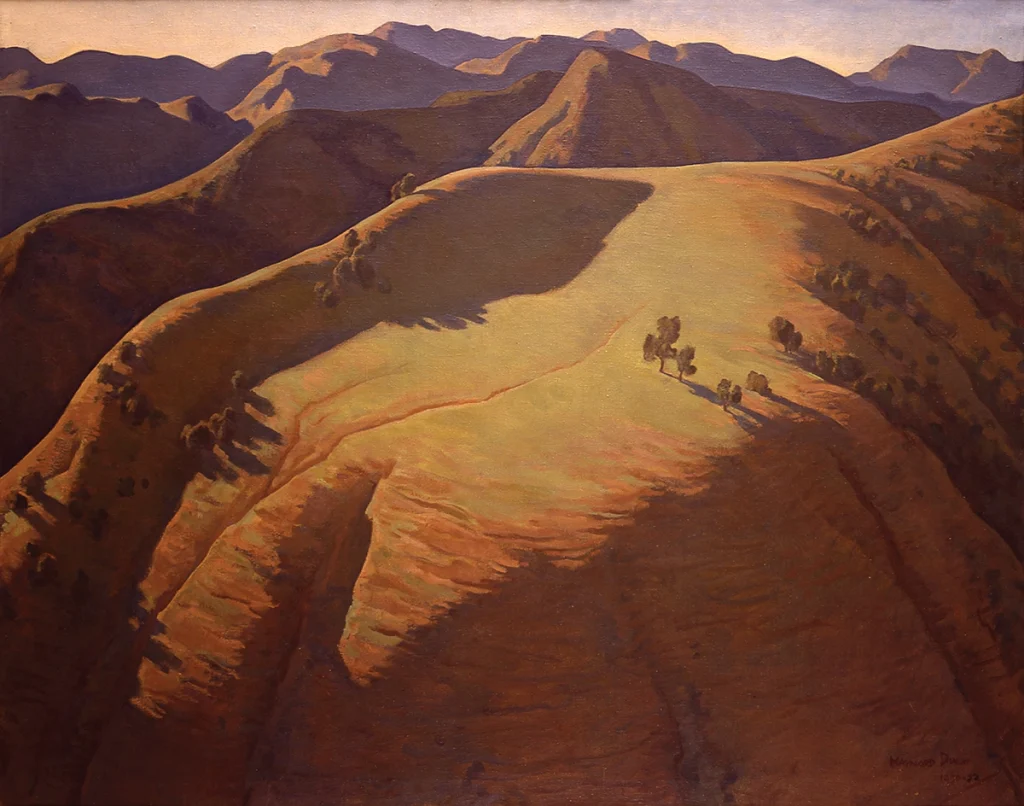
In 1935, Dorothea and Dixon divorced, with Dixon marrying artist Edith Hamlin two years later. At this time, Brigham Young University in Salt Lake City, Utah, purchased 80 of Dixon’s paintings, most of which are still on exhibit there today.
Dixon lived and worked in the West for another 11 years before passing away at his home in Tucson, leaving behind three children from his first two marriages and hundreds of pieces of artwork that would go on to inspire Western artists for decades to come.
Where to See Maynard Dixon’s Work
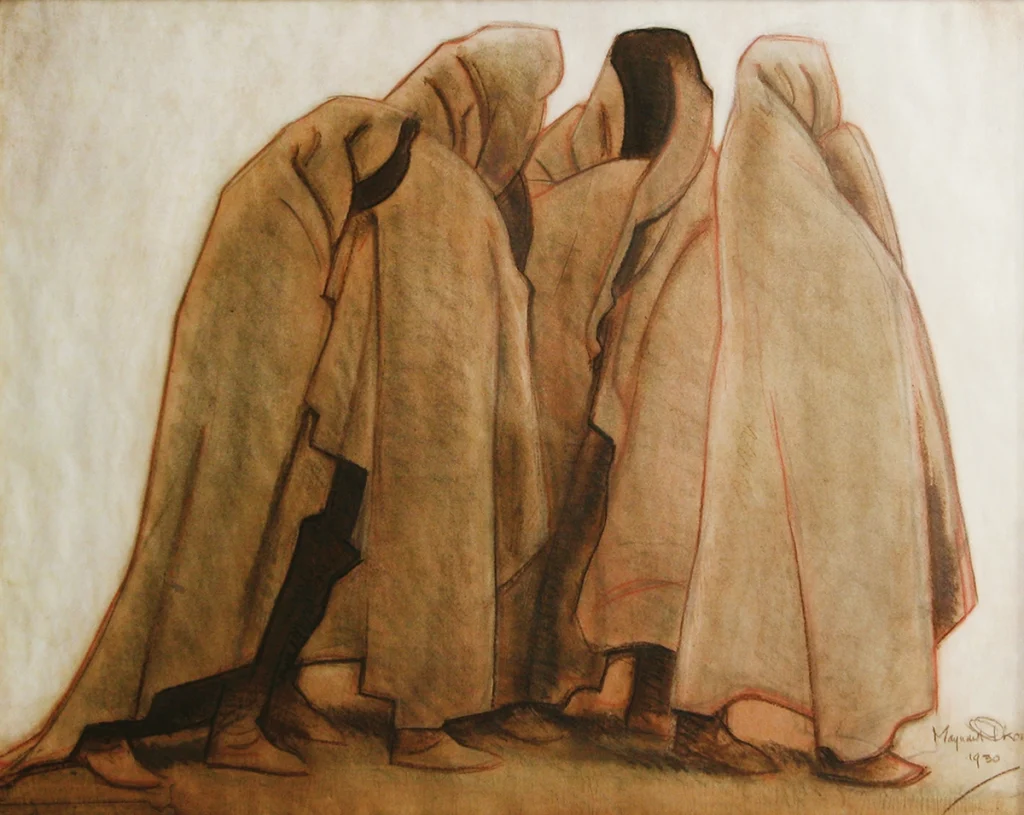
To truly appreciate Maynard Dixon’s work, you need to see it in person. According to Mark Sublette, president of the Mark Sublette Medicine Man Gallery in Tucson, Ariz., several spots in the West provide opportunities to view his work.
◆ The Maynard Dixon & Native American Museum in Tucson, Ariz., has the largest number of Maynard Dixon works on display, with over 150 pieces telling his life story. The collection includes many personal pieces, including his painting easel, which he used for over 30 years.
◆ Brigham Young University’s Art Museum in Provo, Utah, has some of the finest examples of Dixon’s social realism work, and is an important resource for anyone interested in Dixon.
◆ The California State Library in Sacramento has two major murals and a rare collection of Dixon’s writings and ephemera.
This article about Maynard Dixon appeared in the Summer 2025 issue of Western Life Today magazine. Click here to subscribe!