

If you lived outside all the time and did hard work that made you sweaty, you would need at least an occasional bath. The same is true for your horse. So, of course, it is important to know how to bathe your horse.
No firm rule exists for how often you should bathe your horse. Some horse owners bathe their horses once a month; others do it just before a show. Some people wait until the horse is very dirty. Still others need to wait until the weather warms up or simply until they have time to do it.
Whenever you decide to bathe your horse, it’s a good idea to have a process. Horses are large animals, and there’s a lot to cover when you want to get them clean.
Items Needed
First on the agenda is assembling everything you’ll need to give your horse a good bath. These are the items we recommend:
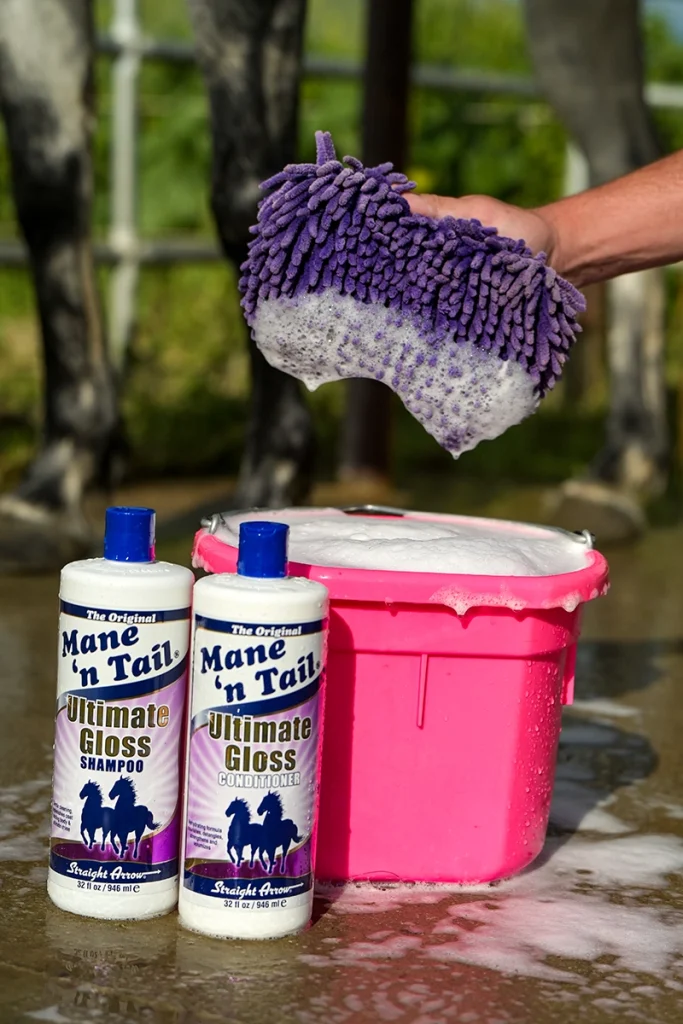
◆ Shampoo: Shampoos made specifically for horses have the right pH balance for equine hair and skin. Plenty of horse shampoos are available at tack and feed stores, and online. Buy the best one you can afford.
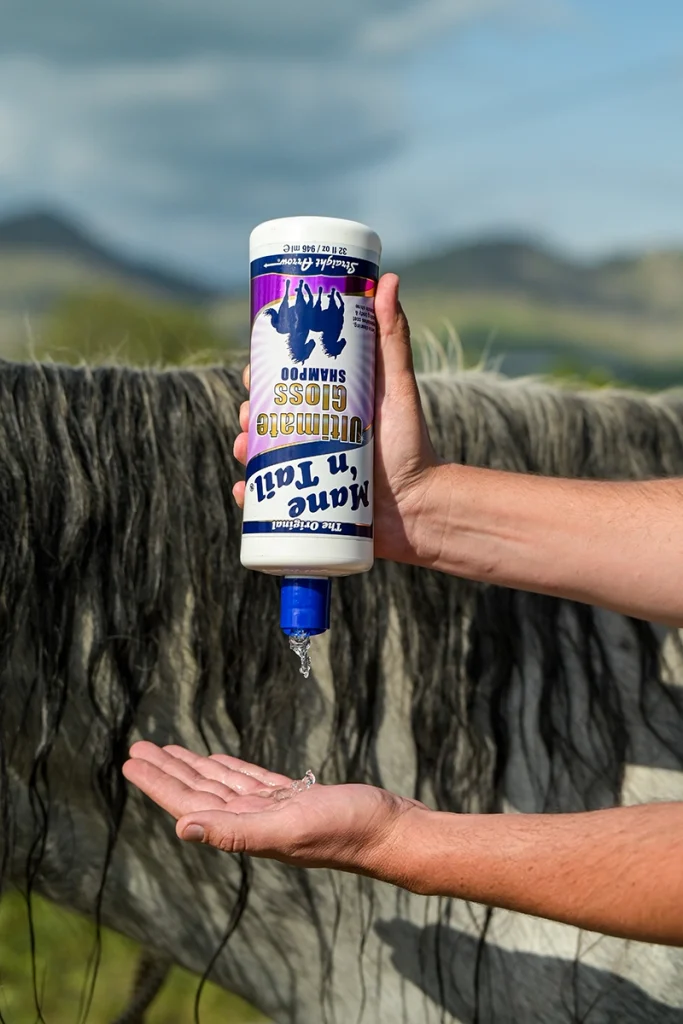
◆ Conditioner: If the horse shampoo you chose doesn’t have a conditioner built in, you’ll want to buy a bottle of conditioner, too. You can use this all over your horse, or just on the mane and tail. Again, make sure it’s a conditioner made specifically for horses.
◆ Body sponge: Tack and feed stores sell body sponges for bathing horses. These are large sponges that are good for working the shampoo into your horse’s coat.
◆ Face sponge: Also known as a tack sponge, you can use this natural sea sponge to clean delicate areas of your horse’s face.
◆ Sweat scraper: A sweat scraper is essentially a squeegee, and works to remove excess water from the horse’s coat after the bath.
◆ Towels: Towels can be used to dry the horse’s face and the back of your horse’s pasterns to help prevent the growth of any fungus on the leg. This is especially important if you live in a hot, humid climate.
◆ Cooler or sweat sheet: If you’re bathing your horse on a hot summer day, you won’t need a cooler or sweat sheet. But if you bathe your horse on a cool day, he might be exposed to drafts while he’s wet. One of these sheets can help keep him warm while he dries.
Steps for Bathing Your Horse
Tie your horse securely in a wash area using cross-ties or a hitching rail. Be sure the floor of the area where the horse is standing will not get slippery when wet. You’ll be washing one side of the horse at a time. Also be sure to remove any buckets, rakes or other items that could be a hazard while you are working around your horse.
Following these steps in order will give you the best results when bathing your horse.
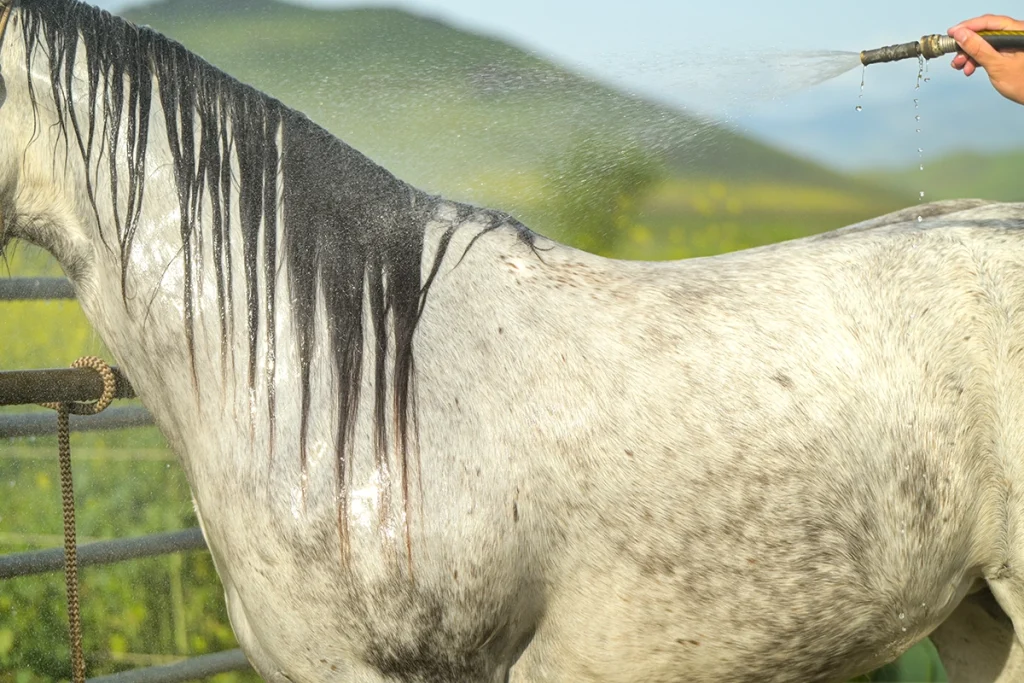
Step 1: Start on one side of your horse by running water from a hose on the horse’s legs. Wetting down the legs first enables your horse to get used to the water, and prepares him mentally for the bath.
Step 2: Slowly move the hose up to where the horse’s neck joins the head, and thoroughly wet one side of the body all the way to the horse’s tail.
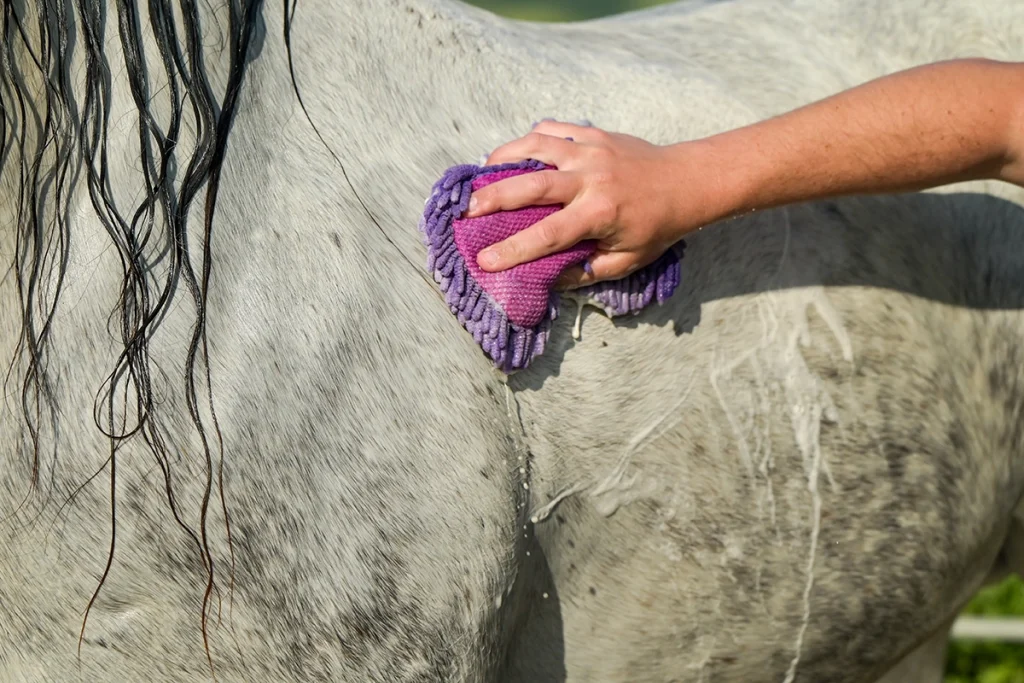
Step 3: Apply shampoo to your sponge and begin lathering the horse’s coat, starting where the neck joins the head, and working your way down across the body. Be sure to scrub underneath your horse behind the front legs, and along the back where the saddle sits. Sweat and dirt tend to gather in these areas. Shampoo the horse’s legs and the outsides of his hooves.
Step 4: After you’ve created a good lather on one side of your horse, rinse the shampoo from his coat. Don’t leave behind any soap residue; it can irritate your horse’s skin.
Step 5: Wet, shampoo, condition and rinse the horse’s mane.
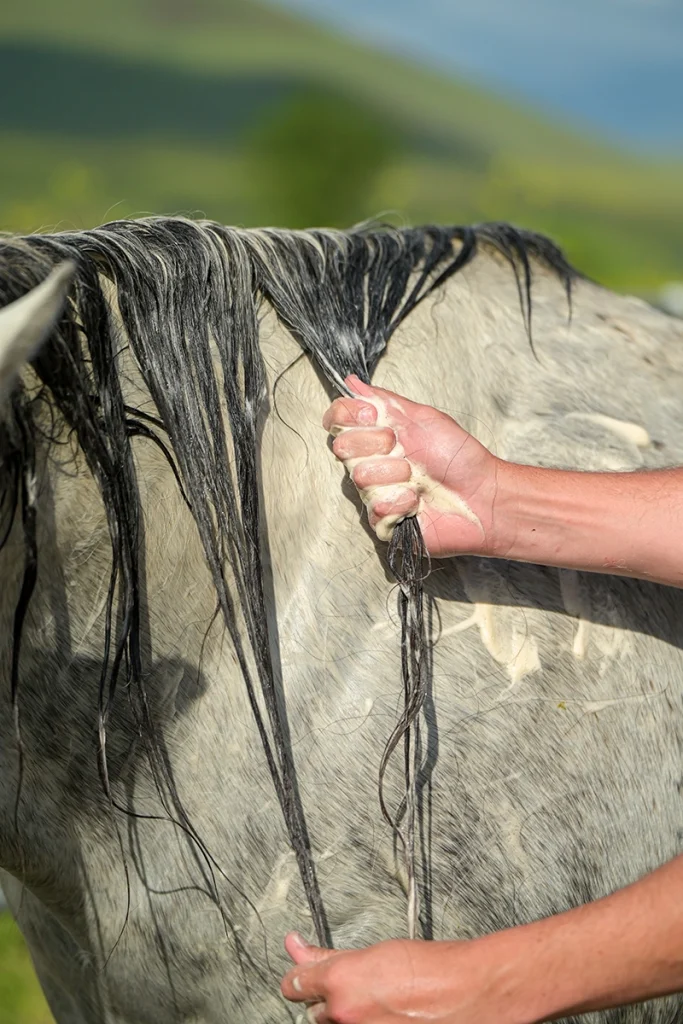
Step 6: Repeat Steps 1–4 for the other side of the horse.
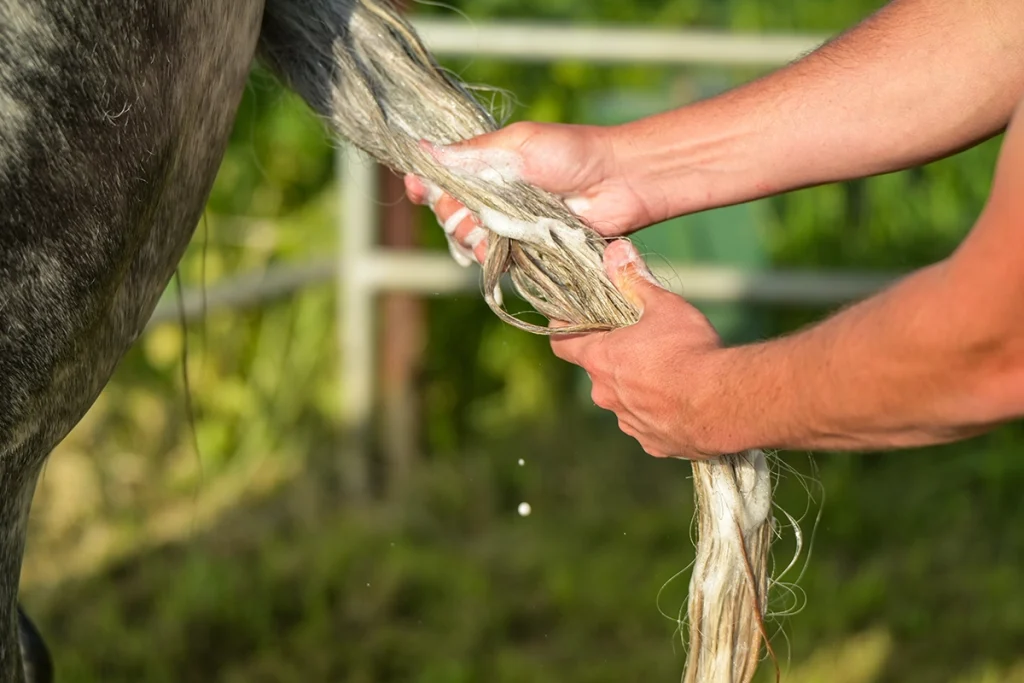
Step 7: Wet the tail thoroughly and apply shampoo. Work up a good lather and then rinse, condition, and rinse again. Be sure to get out all the soap residue from the base of the tail. Leftover soap can irritate the horse’s skin, causing him to rub his tail.
Step 8: Wash the horse’s head. This step can be tricky, depending on the horse. Some horses don’t like water on their faces. It’s best not to spray your horse in the face with the hose; instead, use a damp sponge to wipe it down. If you want to run water on your horse’s face, consider putting the hose nozzle in mist mode. If your horse is not a fan of being sprayed in the face with water—and most aren’t—avoid using shampoo here. Shampoo is difficult to rinse off thoroughly, and it can get in the horse’s eyes.
Once your horse is thoroughly clean, use the sweat scraper to squeegee the excess water from the coat. Then tie your horse in the sun and let him stand until he dries (under supervision). You can also hand-walk your horse to help the coat dry faster. Don’t turn him out in his paddock or pasture while he’s wet unless you don’t care if he rolls and undoes all your hard work.
Some horse owners only bathe their horses when they are really dirty, while others do it more frequently just to keep them looking good. Don’t bathe your horse more than once a month if you can help it. Overly frequent bathing strips the oils from your horse’s coat and can make his skin dry and itchy.
This article about how to bathe a horse appeared in the April 2025 issue of Western Life Today magazine. Click here to subscribe!