
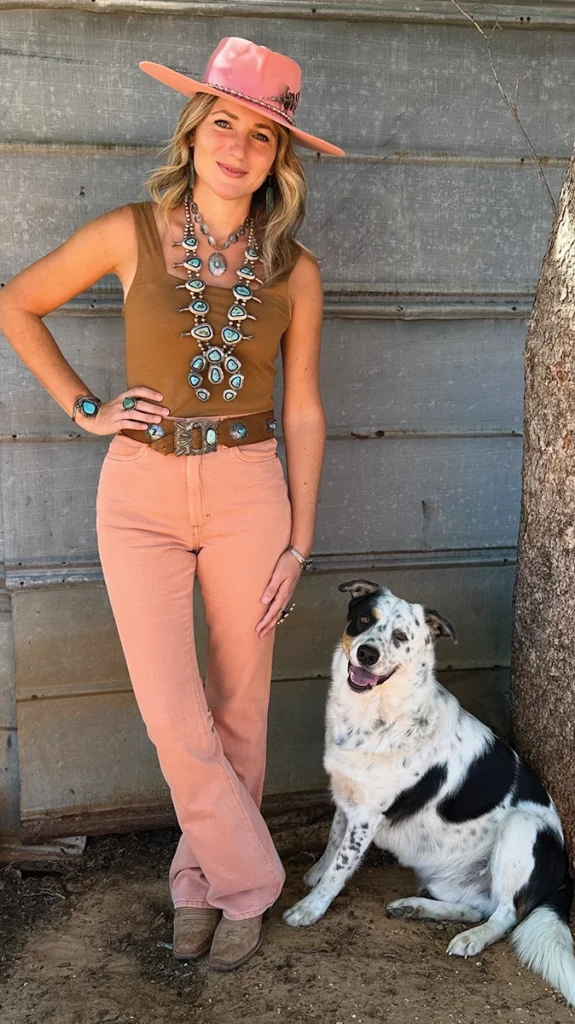
Whether you’re looking at photos of vintage Western fashion or surveying a crowd of cowgirls at any dressed-up event today, you are sure to come across one particular piece of jewelry: the squash blossom. Designed by Southwestern Native American tribes, squash blossom necklaces make a statement with any outfit, and well-made pieces can even become heirlooms. But choosing one of these necklaces can be a bit overwhelming. Here to help you make an informed decision are two experts in the turquoise jewelry world.
What Is a Squash Blossom Necklace?
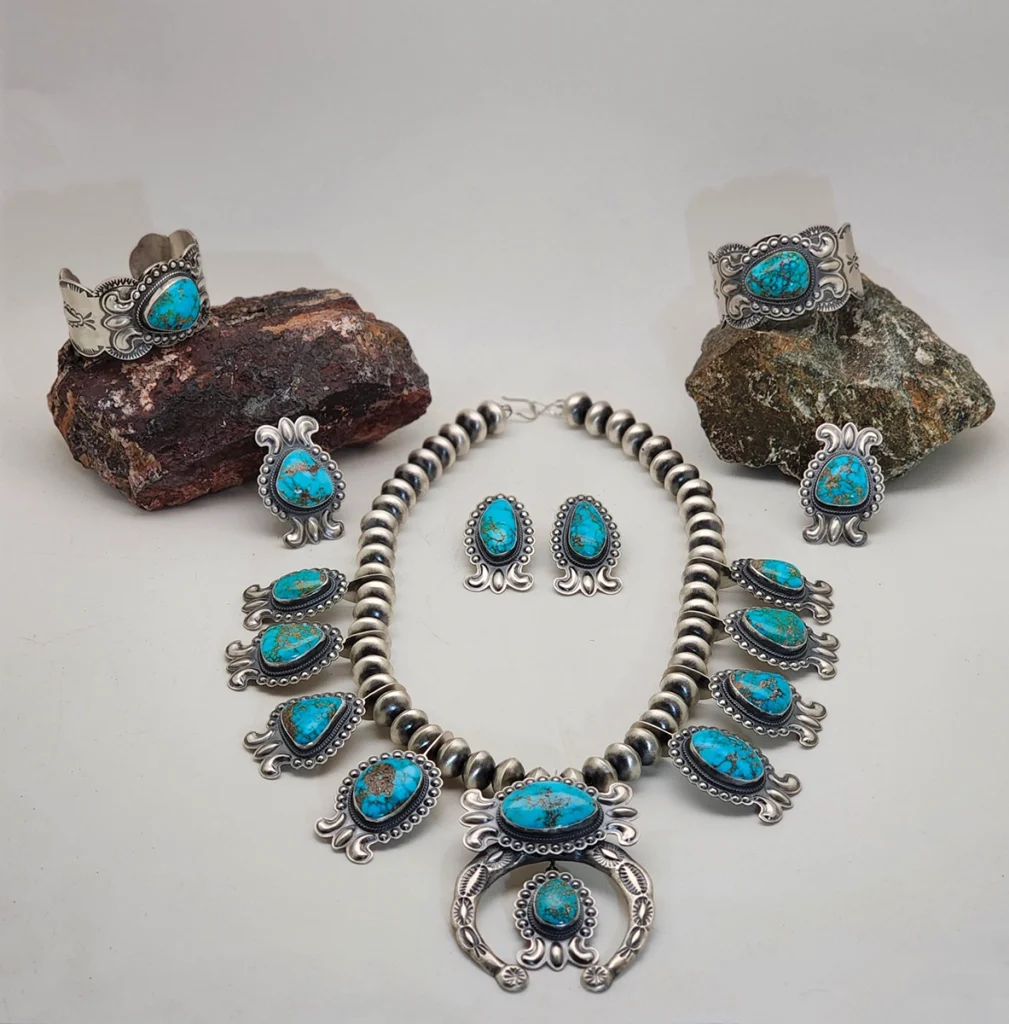
A squash blossom is New Mexico’s Official Necklace. It has one or two strands of silver metal beads with a pendant at the end as connecting the beads. The pendant, called a “Naja,” is shaped like a crescent moon, and the necklace includes multiple beads shaped like flowers with a flare at the end of the bead, which is where it gets the name “squash blossom.”
Squash blossom necklaces come in a variety of lengths, size of beads and size of stones—most squash blossoms contain some kind of turquoise stones embedded in the necklace. Some beads are corrugated for a different look.
“Back in the day, they used money, like dimes, and rolled them into beads,” Robert Johnson says. He is a Native American maker from near Albuquerque, N.M., specializing in crafting stunning squash blossom necklaces.
Why Are Squash Blossoms Special?
Each squash blossom is unique and reflects the creativity of its maker. Johnson makes hand-made beads from sheets of silver and uses high-grade turquoise.
“I try to make everything handmade, down to the blossoms,” Johnson says.
Squash blossoms are a timeless piece of jewelry. Cholla Terry, owner of Cholla’s Turquoise, says turquoise jewelry is as tied to Western fashion as hats, boots, fringe, denim and leather. Squash blossoms in particular are works of art, and have been worn by many celebrities including Elvis, Lainey Wilson, and even Steve Martin.
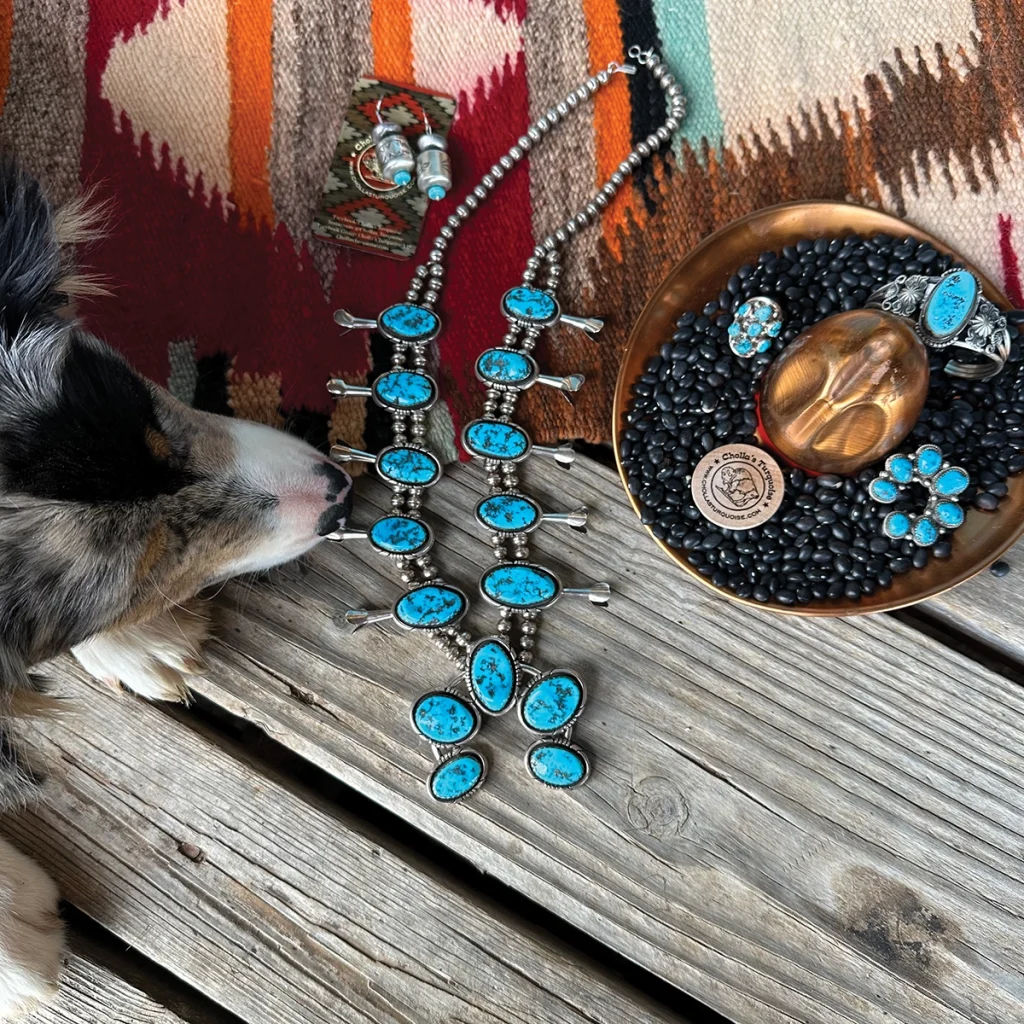
“The squash blossom has been part of the American Southwest for well over 150 years, and is an important part of Native American culture,” she says. “Squash blossoms are well-made so they last, and get passed down and worn for generations.”
Choosing a Squash Blossom Necklace
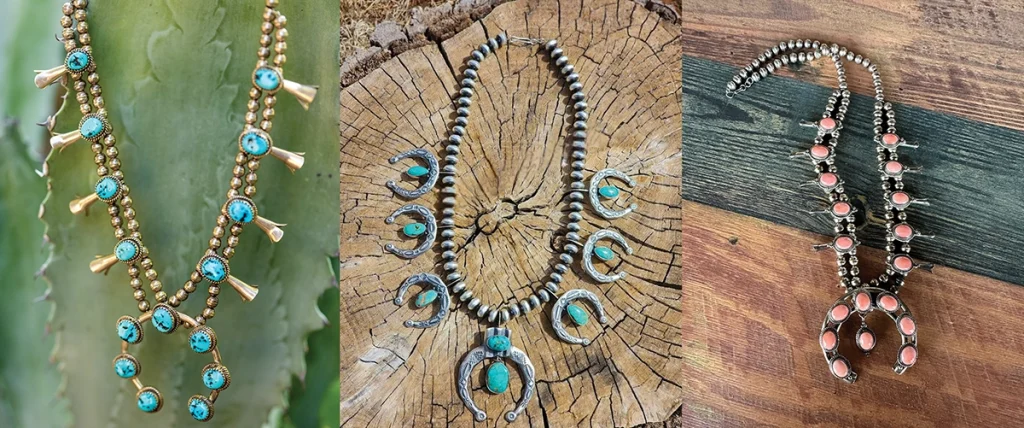
Turquoise
The type of turquoise used has a big impact on the cost of the piece. Some necklaces use stabilized turquoise, which strengthens the stone by treating it with resin to make turquoise that might be too brittle usable.
Block turquoise is either plastic, or plastic and resin made with turquoise pieces.
“Ask the artist or the store owner what kind of turquoise is in the squash blossom,” Johnson says.
Turquoise is named after the mine where it was extracted, so look for names such as Royston, Kingman, Bisbee and Morenci.
“I use natural stones; high-end turquoise,” says Johnson.
Quality
It takes years of experience to create quality squash blossoms. Terry recommends starting with a reputable seller or maker to ensure an authentic piece.
“Ask lots of questions, and if you’re buying online, ask for photos of the back of the piece, clasps, and ask if there are any notable flaws,” says Terry.
Many jewelry makers today use machine-made beads, but may say they’re hand-made, according to Johnson. If you’re making an investment in a costly piece, make sure you are getting what’s advertised.
Look at where the necklace was made. More and more, knockoff necklaces with imitation turquoise stones are being machine-manufactured in countries like the Philippines, says Johnson. If you want an authentic squash blossom, research who made the necklace.
Terry says even if a squash blossom was represented as “genuine,” “authentic,” or “Native American-style,” they can be imported or mass-produced.
“Be sure to ask questions; ask for pictures up close and of the back,” she says. “If you can see the backs of the stones from the backside of the piece, I would pass. Ask if it’s sterling silver.”
Look for a seam on the beads where two halves of the bead were soldered together. Sometimes smooth beads are not actually sterling silver, according to Terry.
One thing to look for is the string the necklace is strung with.
“If the squash blossom is strung on nylon, and not a chain or nylon-coated wire, it may not be real,” she says.
On the back of the Naja, you may see info about the piece—who the maker is, and if the metal is sterling silver. Johnson says there are reference books with Native American hallmarks illustrated where you can look up the maker of your piece, if you’re buying it used. You can also ask the seller for a certificate of authenticity.
However, not all authentic pieces are signed, and some imported necklaces are, according to Terry.
“It’s a common misconception that a piece needs to be signed to be authentic,” she says. “One reason a piece may not be signed is it may not have been originally made to sell, or it may have been made before the 1970s.”
New vs. Vintage
If you buy a new piece of Native American-style jewelry like a squash blossom, consider buying directly from a Native artist or a shop that sells authentic pieces.
“You’re supporting the artist, that’s how they make their living,” says Johnson.
Looking for a vintage piece, you can find squash blossoms as old as from the 1920s, according to Johnson. Each one showcases the artist’s style.
“A vintage squash blossom is something special—it’s a piece of art that you won’t find anywhere,” he says.
Terry loves vintage pieces because of the patina on the silver that only comes with age.
“It’s really a personal preference, though,” she says.
Size
Choosing the size of your squash blossom is completely up to your personal preference. If you prefer a smaller size for easier everyday wear, you may look at around 20 inches from clasp to clasp, with a 2-inch Naja, says Terry. An average size is around 25 inches with a 3-inch Naja, and one on the larger end for a real statement piece could be 31 inches, with a 5.5-inch Naja.
Style
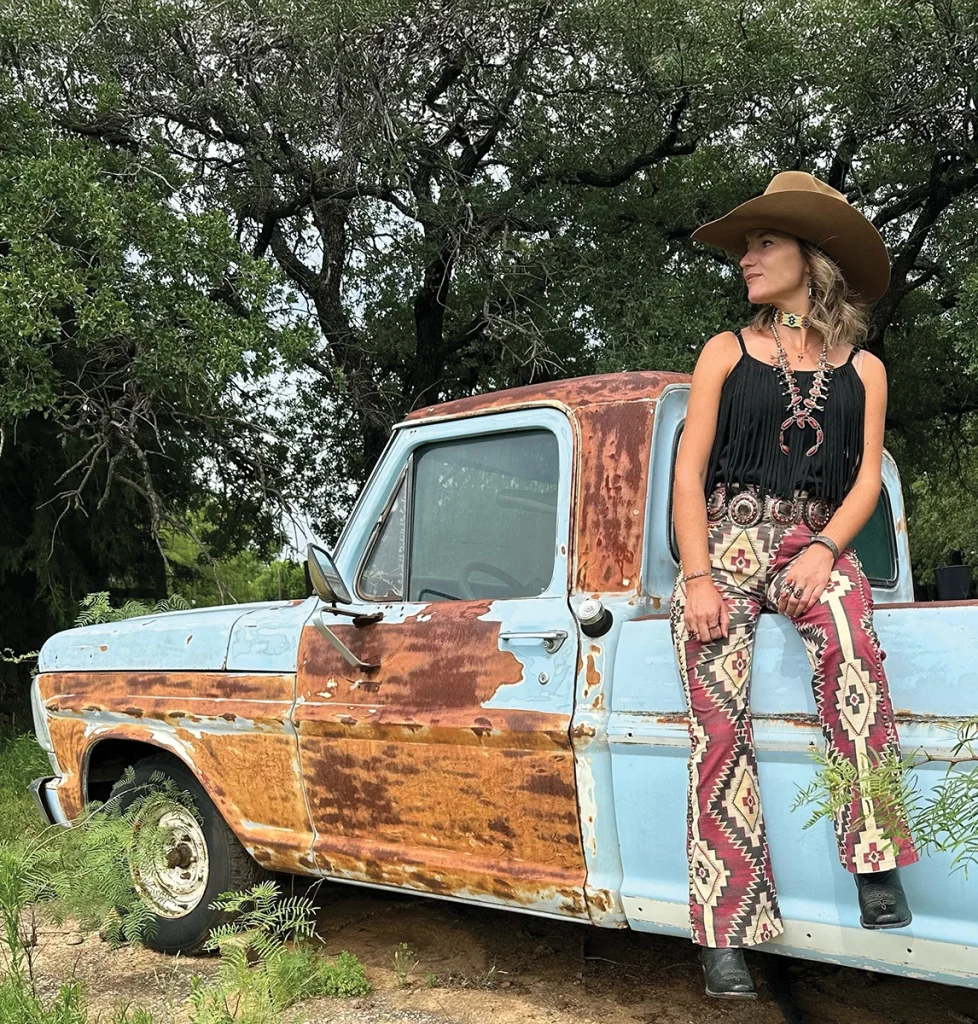
Some style options include:
◆ Plain silver
◆ Multicolored
◆ Cluster
◆ Small stones
◆ Large stones
◆Turquoise with a lot of matrix (other material in the stones, which makes shapes and patterns in a second color)
◆ No matrix
◆ Every shade and color stone imaginable
◆ Different mines
◆ Claws
◆ Coins
◆ Reversible options
◆ New
◆ Vintage
◆ Inlay
◆ Thunderbird
◆ Navajo-made
◆ Zuni-made
Price
An authentic squash blossom can vary in price anywhere from the mid-$500s to $20,000. The price is based mainly on the rarity and quality of the turquoise used, as well as the size of the necklace and stones, the maker, and the price of silver. Stones are priced per karat to the maker.
Caring for Your Squash Blossom
Treat your Native American jewelry carefully, and avoid chemical or liquid cleaner, especially if it has stones.
“Chemicals can damage the stones or remove the darker backgrounds that the artist intentionally added to make the details stand out,” says Cholla Terry. “I recommend leaving the patina on vintage pieces, as it makes them more valuable, but if you prefer shiny, use a polishing cloth. You can polish the whole piece or go over some designs to make them show up better.”
You should also avoid getting your jewelry wet.
“The stones are often backed with sawdust to cushion them, and if it gets wet, it can swell and push your turquoise loose,” she says.
Good jewelry can become heirlooms, according to Terry.
“Native American jewelry is an investment; it’s something of quality that can be passed down for generations,” she says.
Meet the Experts
Robert Johnson is a Native American jewelry maker from Moriarty, N.M. He has been making jewelry for 39 years, and squash blossoms for two decades. Follow on TikTok @Lenorejohnson316 or Facebook and Instagram @Robert.Johnson.Jewelry.
Cholla Terry owns Cholla’s Turquoise—jewelry only—and Squash Blossom Ranch, with Western antiques, vintage Native American-made rugs, pottery, baskets and more. Located in Azle, Texas, she’s been dealing in authentic Native American-made jewelry since 2007. Visit squashblossomranch.com.
This article about squash blossom necklaces appeared in the Winter 2025 issue of Western Life Today magazine. Click here to subscribe!