

In Chavanne-de-Bois, Switzerland, 4-year-old Tessa Nicolet clutched her mother’s hand. Two riding instructors waited for her to speak.
After what seemed like an unofficial staring contest, Nicolet summoned all the courage she could muster and told them the truth: she loved horses and she wanted to learn how to ride.
And that’s how it all began.
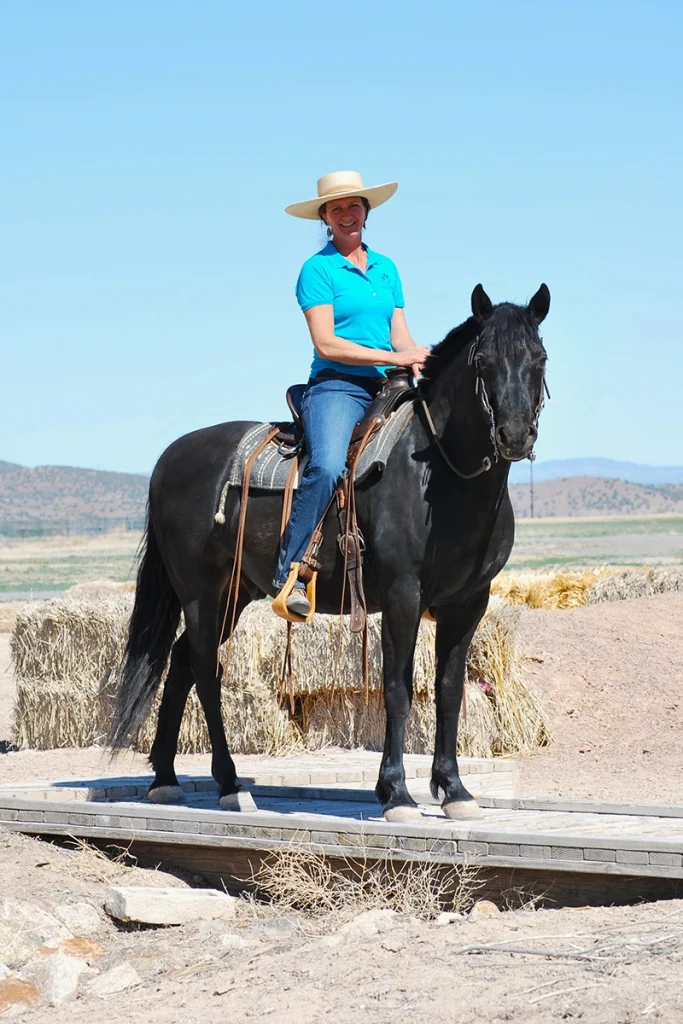
Learning With the Colts
Nicolet was approved to begin lessons. But once she got near a horse, she saw how powerful the animals are, and she felt scared. But her fear of their power was paired with a pre-existing love for them. The latter helped her commit to moving forward with lessons.
Nicolet started by learning English disciplines, but it wasn’t long before she took an interest in Western riding as well. She explored jumping, trail riding, reining and obstacle work. Horses became her world.
At 10 years old in 1990, she moved from Switzerland to the United States. There, in Wyoming, her family started a small breeding operation. This provided Nicolet with opportunities to get to know horses in a new way, particularly with colt starting.
Although young, Nicolet’s interest in the horse world had exposed her to a variety of training methods, including some that prioritize human dominance. She tried that style of training with the colts and discovered two things: she didn’t have success and it didn’t make her feel good. This drove her to look for alternatives.
She began watching the colts’ natural behavior, observing them playing together, moving each other around, and interacting with mature horses in the herd. Based on what she saw, she formed her own system of working with the colts, and she found success. This led to Nicolet being put in charge of starting the 3-year-olds.
“I realized that if I didn’t want to get bucked off immediately, it was a good idea to play with [the colts] a little bit,” she says.
Little did she know, this lesson in observation would help her future self work with a challenging horse.
A Horse Called Jesse
Fast forward to 2011. Nicolet had moved to New Mexico, earned a bachelor’s degree in biology, and met her husband, Daniel Whately. Her studies then took her to Arizona, where she earned a master’s degree in forestry. She’d also spent the last 10 years horseless.
But that changed when she encountered a Quarter Horse for sale that she’d met years prior through her family’s business—a bay mare named Jess Ta Bar Bee (aka “Jesse”).
Whatley remembers the day Nicolet brought Jesse home. He describes the mare as unsettled, unhappy and unpredictable—a horse who was fine one moment and upset the next.
Nicolet discovered Jesse had separation anxiety, a bucking habit, and was generally fearful, sparking fear in Nicolet, too. But like with the colts, Jesse’s problems drove Nicolet to search for solutions.
Whatley recalls Nicolet studying training methods, horse behavior, and even horse anatomy, all with the hope of learning how to reach Jesse.
Eventually, Nicolet’s research and time spent with Jesse revealed that the mare became defiant if she felt forced. This discovery became the pair’s breakthrough and confirmed to Nicolet the importance of observing and listening to the horses she works with.
“As soon as I allowed for that space for her to ask some questions and have an opinion, it was amazing,” Nicolet says.
After that, training progressed quickly. Together, Nicolet and Jesse took lessons, competed in trail competitions, explored trails and, most importantly, enjoyed each other’s company.
Whatley says what took place between his wife and the bay mare is they became partners. In watching the pair work together, he witnessed both Nicolet rediscovering her love of working with horses and Jesse finding happiness.
“She [Jesse] just looked like she belonged where she was.” he says.
Becoming Cohesive Horsemanship
Nicolet’s work with Jesse unintentionally brought her one step closer to a career in horse training. When the pair competed, spectators noticed their partnership, leading to Nicolet receiving training inquiries.
Around 2014, Nicolet retired Jesse. That same year, she began taking on training requests. But it wasn’t until sometime later when a fellow competitor, Leslie Hait, reached out that things became serious. Impressed by Nicolet’s horsemanship, Hait asked her to teach a clinic.
The request made Nicolet realize it was time to start something official. Influenced by her own experiences, natural horsemanship, and concepts from classical French dressage, she put pen to paper, creating a list of seven core principles:
1. Be an empathetic leader
2. Be a master of body language
3. Be playful
4. Be curious
5. Be focused
6. Be clear
7. Be a student of lightness
These principles formed the foundation of what would become Cohesive Horsemanship. Born into existence in 2019 in Payson, Ariz., the business operates with a goal of helping people learn how to build partnerships with their horses.
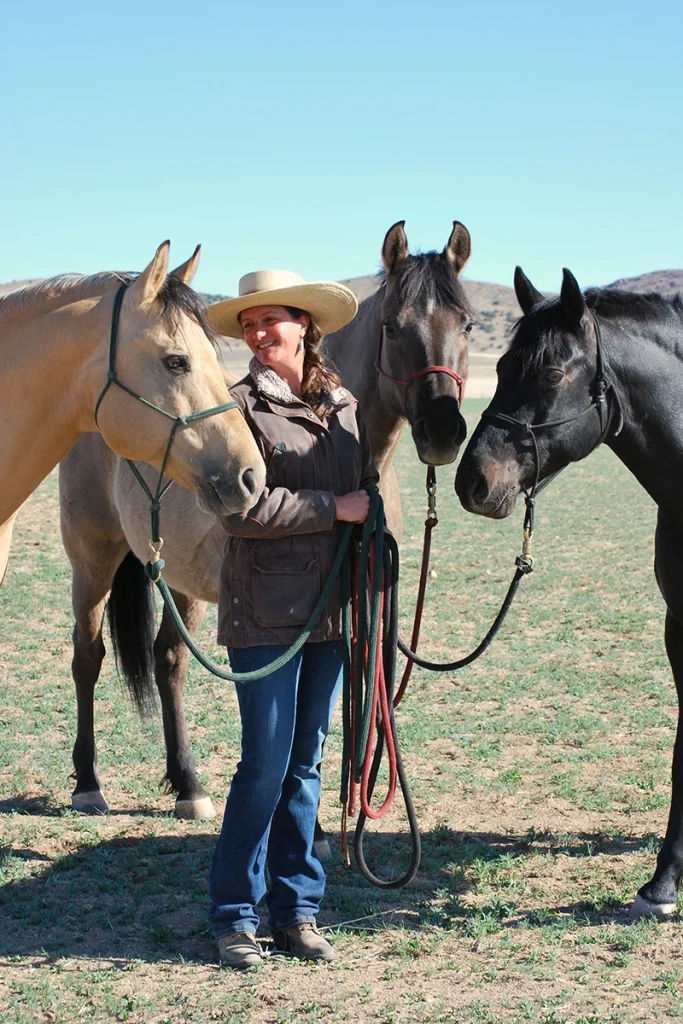
“I really love seeing people able to work with their horses in a way that builds partnership and builds that connection so they can feel it; it’s just really satisfying,” Nicolet explains.
Cohesive Horsemanship offers private and virtual lessons, clinics, in-person workshops, and an online network with free classes, self-study courses and an online group called the Monthly Journey.
Hait continues to train with Nicolet. She participates in virtual lessons, clinics, and online courses and remains ever grateful for Nicolet’s guidance
“She has a rare gift for creating a space where both horse and rider feel seen, supported, and capable of achieving things they didn’t think possible,” says Hait.
Hopeful for the Future, Thankful to the Past
Despite what she’s accomplished, Nicolet’s desire to keep learning remains strong. In the near future, she plans to explore equine biomechanics and psychology and blend what she learns into her work. Additionally, she hopes to continue to compete in working equitation with her three Morgan horses.
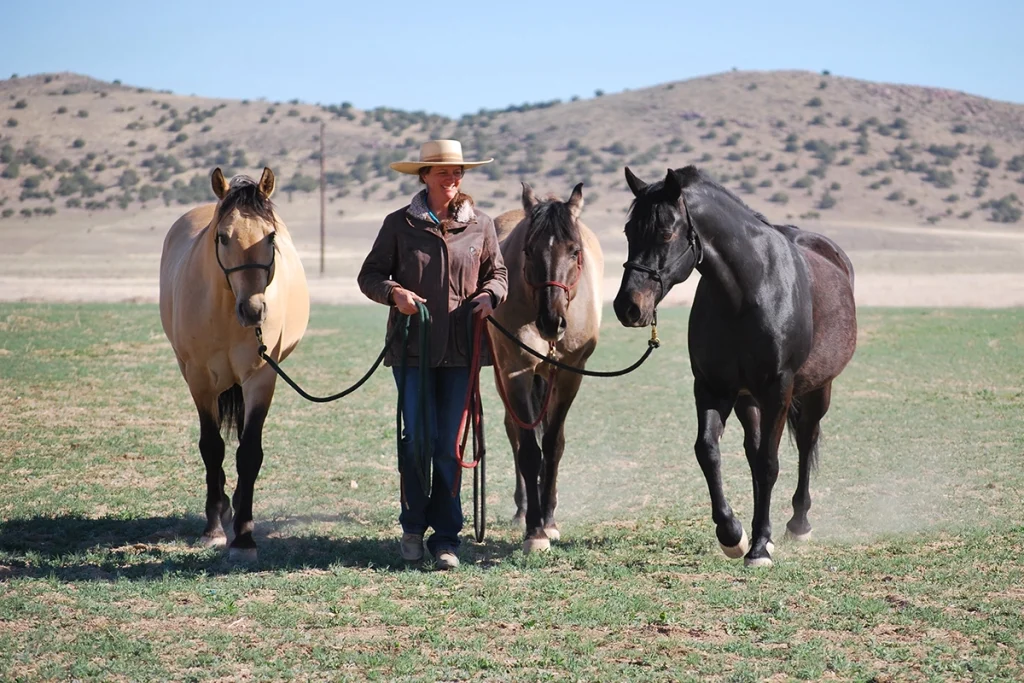
Through her work as a trainer and time spent in the show ring, Nicolet seeks to demonstrate that empathetic training techniques can create great partnerships with horses.
But Nicolet’s future aspirations don’t prevent her from reflecting on the past. When she does, she’s overwhelmed by a deep gratitude to the horses and humans who have taught her so much.
Today, Nicolet can be described as a horse trainer, competitor, equine professional, and lifelong learner. Even so, she hasn’t lost sight of her 4-year-old self in Switzerland, who started this journey by dreaming of riding horses.
“In a lot of ways, I’m still that scared little girl who is super passionate [about horses],” she says.
Learn more at cohesivehorsemanship.com.
This article about Tessa Nicolet appeared in the August 2025 issue of Western Life Today magazine. Click here to subscribe!