
For over 100 years, 4-H has welcomed young people of all beliefs and backgrounds, giving youth an opportunity to express who they are while developing passions and learning lifelong skills. “4-H’ers,” as participants are known, dedicate a year of their time to project-based learning, devoting hours each week to their chosen project.
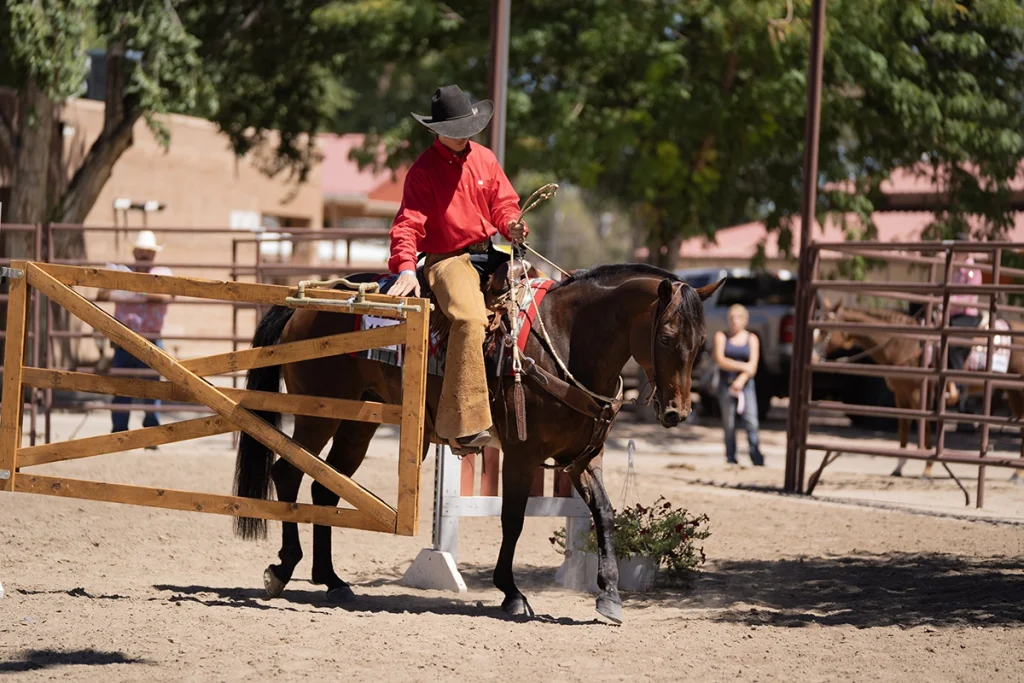
Horsemanship provides an avenue for unique learning in 4-H, encouraging members to focus on personal development qualities such as responsibility, leadership, and communication alongside equine skills on the ground and in the saddle. 4-H’ers can ride and train horses through the horse project, study equine science in a “horseless horse” project, and compete in their chosen event or discipline at the local, state, and national level.
The Four H’s
Founded in 1902 in Clark County, Ohio, 4-H is America’s largest youth development organization. Over six million youth are led by half a million volunteers in over 100-plus project options. The four H’s stand for head, heart, hands, and health, with the 4-H pledge guiding club members through their learning: “I pledge my head to clearer thinking, my heart to greater loyalty, my hands to larger service, and my health to better living, for my club, my community, my country, and my world.”
In most counties across the country, 4-H follows a local club model. Groups of young people ages 8 to 18 and their adult volunteer leaders engage in hands-on learning through experiences, such as tours of equine facilities, horse shows, county fairs, state fairs, clinics, and workshops. Many clubs ride together weekly in preparation for the summer show season.
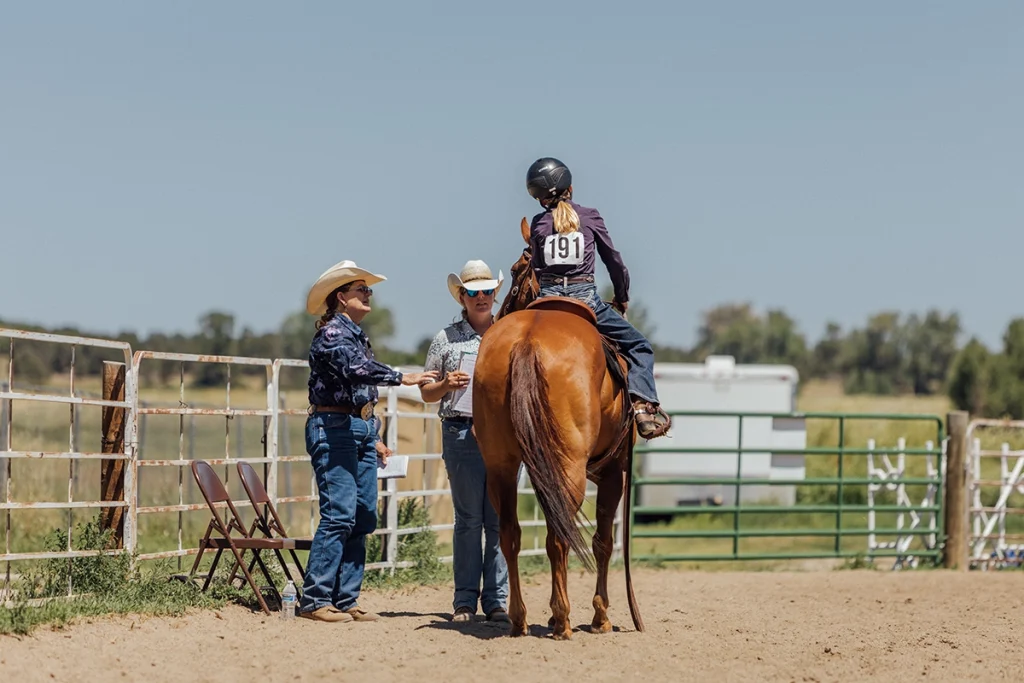
At the 4-H level, the focus is on rider development and presentation rather than specific breed association regulations. The horse is a tool for developing the 4-H’er.
Historically, the horse project was one of the original projects offered in 4-H. Montana’s Powder River County saw the development of a horse 4-H project in the mid 1930s when county agent N. A. Jacobsen outlined a 4-H horse project. 4-H stables at Rock Springs Ranch in Kansas have been operating for over 80 years, and a horseless horse project appeared in the late 1950s in the Melrose 4-H Variety Club in Connecticut.
Local volunteers are equipped with scientific, peer-reviewed curriculum and resources to guide their instruction. It is the intent of the local cooperative extension office to share university knowledge with the general public in a user-friendly way, and horsemanship is no exception. Many 4-H clubs partner with community experts to expose the club members to professionals, such as farriers, veterinarians, show judges, chiropractors, and more.
Five Components to a 4-H Project
Every state’s 4-H program varies slightly in project requirements; however, the five primary components of a 4-H project typically include:
1. Completing a Record Book. Record books are where 4-H’ers track their learning by documenting project expenses, income, animal health history, goals, et cetera. Record books are due at the end of the 4-H year.
2. Participating in Community Service. Community service is at the heart of 4-H. At least one community service project is required each 4-H year, and the work can be done as an individual or with a 4-H club.
3. Attending Club Meetings. Club meetings are where 4-H’ers gather to learn parliamentary procedure, discuss official club business, listen to member demonstrations, hear from guest instructors, and plan club events like fundraisers and educational clinics. A minimum of 50 percent attendance is typically required.
4. Exhibiting your Project. Every 4-H’er exhibits their learning and project progress. For the horse project, exhibition typically occurs during the county fair horse show. Riders compete in a variety of disciplines and classes.
5. Performing a Demonstration. Demonstrations are opportunities for 4-H’ers to demonstrate skills learned through their project. Most 4-H’ers give a demonstration to their peers at a regular club business meeting. They vary in length and topic, but are typically connected to the project area. 4-H’ers may use props, boards, notecards, and other tools to help instruct and guide their demonstration.
Skill Demonstration
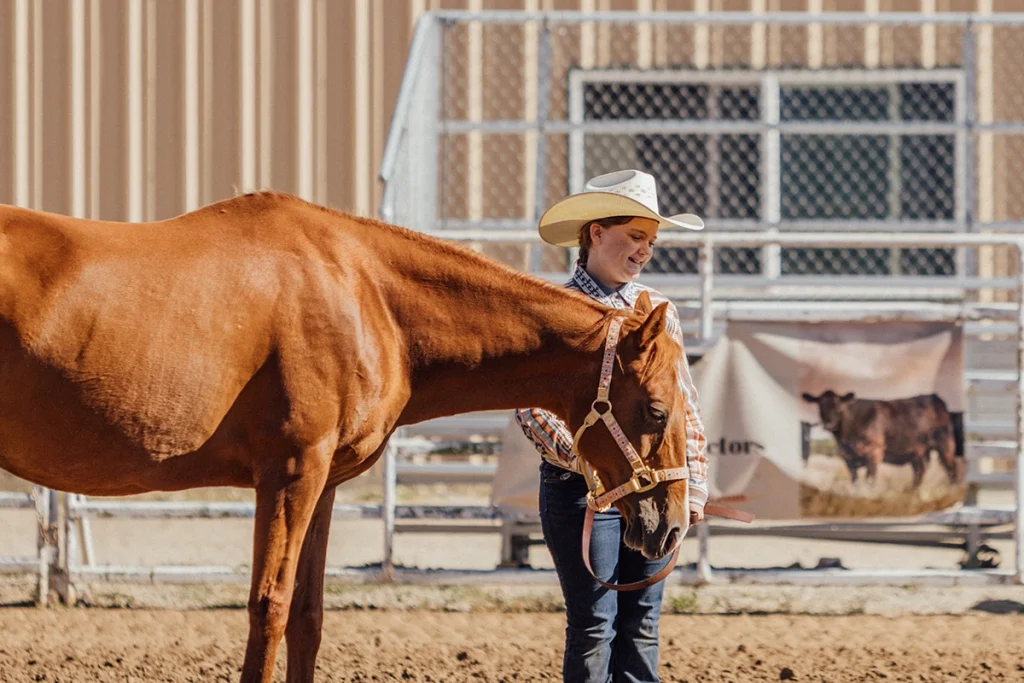
Countless opportunities exist for competitive 4-H’ers to demonstrate their skills. County and state fairs often host classes across a wide variety of disciplines, including Western classes, cattleworking, hunt seat, dressage, trail, over-fences, driving, showmanship, and in-hand classes for Miniature Horses and donkeys. 4-H participation is not limited by breed, type, or age of equine involved; however, a 4-H’er does work with the selected equines for the duration of the project timeframe.
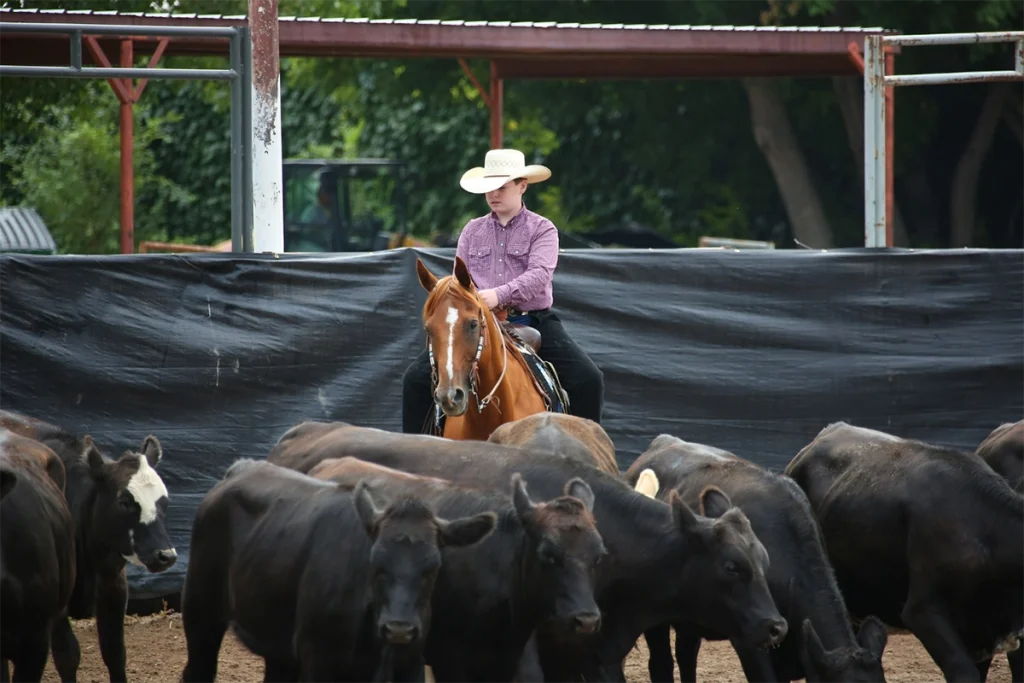
Sandi Thurston, horse trainer, 4-H show judge, and carded breed association judge explains the benefits of showing.
“When I am judging, I get to see youth that have invested in themselves and their horses to improve, challenged themselves to be more resilient, and adapted to different situations,” Thurston says. “I can offer constructive critiques by using score sheets and offering feedback at the end of the show. I like to recognize their efforts for their commitment to horse ownership, thank them for bringing their horse to a competition, and acknowledge the parents, leaders, and coaches who supported their journey.”
In Colorado, 4-H’ers can advance through a skill-based level progression program. Levels one through four are offered in the English and Western seats, with specialty competency tests offered in gymkhana, roping, trail riding, ranch horse, and over-fences. In order to advance through the levels, both a written and riding portion must be passed prior to competing. Safety and understanding of the whole horse is stressed at every level.
Non-Riding Ways to Get Involved
◆ Hippology: This is a comprehensive equine knowledge contest where teams of 4-H’ers compete in equine science topics.
◆ Horse Judging: These are contests where 4-H’ers evaluate and rank horses based on movement, conformation, breed characteristics, et cetera.
◆ Veterinary Science: This equine-adjacent project allows members to study veterinary science for large and small species.
Benefits Abound
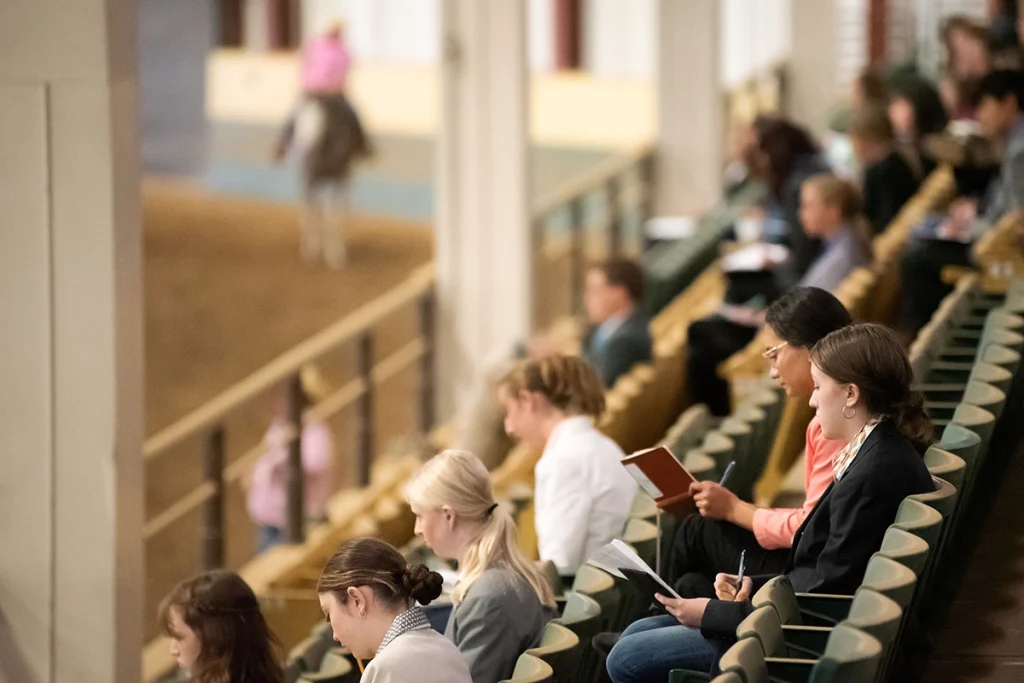
Overall, 4-H stresses positive youth development in whichever project the child selects. 4-H parent Heidi Wingfield says the program has been a great experience for her child.
“I have seen lots of growth and grit over the last couple of years with my kid in 4-H,” Wingfield says. “We have met some incredible people along the way who my daughter looks up to and seeks out for help and advice.”
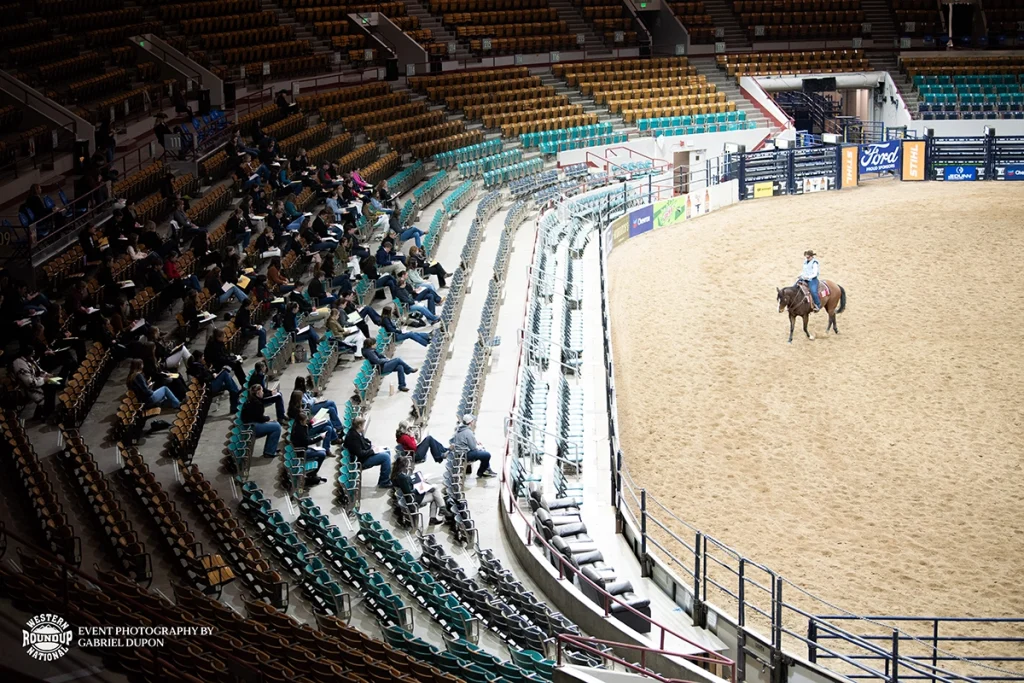
Heidi’s daughter Leila comments on how she has supported her horse’s development in being comfortable with a show arena filled with grandstands, announcers, audiences, and more.
“My horse was terrified of the grandstands at first,” she says. “We had to practice a lot to get him comfortable. It’s a lot of work, but it pays off.”
Getting involved in 4-H begins with contacting your local county extension office. 4-H has opportunities for all.
This article about 4-H appeared in the August 2025 issue of Western Life Today magazine. Click here to subscribe!